Plant with a plan
By Pune: | 18 Jan 2003
Spread over 158 acres in the Pimpri-Chinchwad industrial belt near Pune, the plant is probably the most modern and automated installation of its kind in the country. But this standout symbol of Indian engineering is representative of more than just that: it is another example of the Tata vision; it is a story of pluck, skill and discipline; and, crucially, it is about people rather than machines.
Whether on the shop floor, in the managerial offices or the corporate enclaves, theres a feeling among Tata Engineering employees that the setbacks of the recent past are history and that a future full of exiting possibilities beckons. Driving the good vibrations is the Indica. Though it may not be the companys biggest money earner, the cars good health is the clearest indicator that Tata Engineering is on the highway to the promised land.
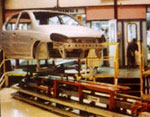 The
Pune plant rolls out, on an average, 350 Indicas a day,
six days a week (its record is 393 in a day), but the
market is ready for more. Over the last two months (June
and August, 2002), our sales numbers have depended on
how many cars we can make, not on whether we can sell
them, says J M Thatte, general manager (manufacturing).
The
Pune plant rolls out, on an average, 350 Indicas a day,
six days a week (its record is 393 in a day), but the
market is ready for more. Over the last two months (June
and August, 2002), our sales numbers have depended on
how many cars we can make, not on whether we can sell
them, says J M Thatte, general manager (manufacturing).
Quality before
quantity
Putting quality ahead of quantity in its manufacturing
manual has made the Indica an ace in Tata Engineerings
automotive pack. Ensuring that this quality is reflected
in every car that comes off the assembly line is the responsibility
of 2,500 shop-floor workers and 552 supervisors and officers.
As with any large-scale engineering enterprise, the Indica plant operates to a rhythm that can seem awesome and mysterious to the inexperienced eye. But theres a method in this immense scheme of affairs, and its precise, well defined and efficient. The people who make the system work, and the machines that help them do so, share a relationship that is at once complimentary. It helps that the average age of Tata Engineerings Indica workforce is a mere 28.
There are five different rooms or shops involved in the production of the Indica: engine and transaxle shop, press room, weld room, paint shop and final assembly, each of them housed in separate blocks. The room or shop tag is a misnomer - the smallest of them, the press room, is spread over nearly 13,000 square meters - but each of these facilities has a unique and vital role to play in shaping the Indica.
 Automobile
manufacturing does not follow a linear pattern. In the
Indicas case, the engine and transaxle shop makes the
engine and the gearbox for the car and transports it to
the place where the final assembly takes place. But the
body-production procedure moves in single file from one
block to another: press room to weld room to paint shop
to final assembly, where the newly coloured and tweaked
body of the car gets merged with various components.
Automobile
manufacturing does not follow a linear pattern. In the
Indicas case, the engine and transaxle shop makes the
engine and the gearbox for the car and transports it to
the place where the final assembly takes place. But the
body-production procedure moves in single file from one
block to another: press room to weld room to paint shop
to final assembly, where the newly coloured and tweaked
body of the car gets merged with various components.
Engine and transaxle
(ETA) shop - the heart makers
Situated at one end of the plant, the ETA building is
separated from the other manufacturing blocks by the Indicas
office complex. The standalone location sits well with
the character of the ETA wing. Whereas the others blocks
have intrinsic links to each other, what the ETA makes
bypasses three of them and heads straight to the final
assembly shop.
The ETA shop is where the heart of the Indica - the engine and gearbox - is crafted. The engine half of the shop manufactures and assembles the many components that constitute the engine, which is then tested in a special enclosure. The transaxle half is where the gearbox of the Indica gets shape and definition.
Engine shop
There are three broad operational areas here:
Engine machine shop - This is where the five most critical parts of the engine are made: cylinder block, cylinder head, crankshaft, camshaft and connecting rod.
Engine assembly - The five critical parts and outsourced components are brought together here. The place where this is done is among the cleanest in the plant, with the temperature maintained at 23oC to guard against any expansion of the engine-part metals. The cylinder-block and cylinder-head assemblies move in near parallel conveyor lines before being joined in a confluence zone.
Engine testing - Diesel and petrol engines are checked separately in testing cubicles and test beds for power, fuel efficiency, smoke, torque and leaks. After the testing operations, the engines are moved to where they will be integrated with the gearbox.
Transaxle shop
 Transaxle
is the correct term, according to engineers, for what
the rest of the world understands as a gearbox. The transaxle
shop at the Indica is divided into six areas: soft machining,
heat treatment, hard machining, housing, assembly and
testing.
Transaxle
is the correct term, according to engineers, for what
the rest of the world understands as a gearbox. The transaxle
shop at the Indica is divided into six areas: soft machining,
heat treatment, hard machining, housing, assembly and
testing.
The making of the Indica gearbox starts with soft machining, where cutting and allied operations are done on the basic parts (gears) of the transaxle. Once the gears have been cut, they are treated with heat. This is a procedure that makes the outside of the gears hard (to make them resilient and long lasting), while keeping their insides soft (to prevent them from cracking under pressure).
After heat treatment the different gear components come to the hard machining section, where they are honed and further cut to correct distortions that are a by-product of the heat-treatment routine. The gearbox and the casings covering it are then put together in an assembly area. A water spider - the best worker on the shift and a de facto team leader - coordinates the chores here.
Each gearbox that emerges is given a number for identification before being checked for air seepage, shifting effort, noise levels, etc. After testing these gearboxes are sent to a dispatch area from where battery-operated machines take them to the engines. The gearboxes are attached to the engines at this point.
Once the engine starter and an air-conditioning compressor are added to this fabrication, the finished engine and transaxle is ready for the short trip to the final assembly enclosure.
Press room -
the shapers
The press shop offers the most spectacular show in the
Indica car plant - a 2,000-tonne metal monster crashing
down on a thin sheet of steel and giving it a pre-destined
shape, the frame for a door, for instance. The sight that
precedes this display of brute might is only slightly
less impressive: giant robotic arms using vacuum caps
to transport prey (the steel sheets) to their rendezvous
with programmed violence.
But theres more to the press room than power and state-of-the-art automation. This is where the inner and outer body of the Indica is moulded by German-made presses that can generate pressures from 800 to 2,000 tonnes in tandem. The pressures thus exerted shape the steel sheets to the specifications of the die cast they are laid out on. The scrape steel thats generated falls onto an underground conveyor belt which carts it out of the shop.
There are to two lines of five presses each in the press room. One line caters to the outer body (the skin) of the Indica, the other to the inner. This is the smallest of the blocks in the plant in physical size and manpower requirements, but it plays a big role in defining the Indica, part by body part.
Weld room -
the unifiers
 The
weld room does not have the special effects of the press
room, the multicolour allure of the paint shop or the
eye-catching grandness of the final assembly facility,
but this is no poor cousin performing journeyman assignments.
It is here that the Indica becomes recognisable. What
till now was metallic mishmash acquires a definite form
in the weld shop, named so because it is the place where
the cars body is welded, or joined, together.
The
weld room does not have the special effects of the press
room, the multicolour allure of the paint shop or the
eye-catching grandness of the final assembly facility,
but this is no poor cousin performing journeyman assignments.
It is here that the Indica becomes recognisable. What
till now was metallic mishmash acquires a definite form
in the weld shop, named so because it is the place where
the cars body is welded, or joined, together.
There are seven conveyor lines in the weld shop. One is for the front portion of the Indicas underbody, another for the rear. A third line unites the front and rear of the cars underbody, and the fourth does the re-spotting (welding in areas that are ordinarily unapproachable). Then theres a main tack line, where the sides of the Indica and the roof get attached to the now complete underbody. The closures line brings in the doors, the tailgate, hood, fenders, etc, and the slack conveyor completes the integration job.
After dent rectification, the car is cleaned with a solvent. Gaps are covered using a thumb sealant and jigs are placed so that the doors remain closed in the paint shop, to where the Indica is now headed. The car is now called a body in white and is given a number tag.
Paint shop -
the decorators
The paint shop is the beauty parlour of the Indica car
plant. Spread over 44,400 square meters, its the biggest
block in the plant. But magnitude alone does not make
the paint shop stand apart; it is the quality of its work
that makes it special (Mercedes is among those who uses
its expertise).
The Indica has come out in 20 different shades thus far, and new ones are introduced once in about six months. Advances in painting technology make this easier than in the past. In 1925 it took 23 steps stretching over three to six weeks to paint the shell of a car; today it takes 18 steps spread over less than 10 hours to accomplish the same (the Indica plant can paint 42 cars in an hour).
The paint shop is a cut above the rest of the plant in the spic-and-span department. This is a necessity in this facility because even the slightest bit of grime - in some areas of operations - can have telltale effects. The cleanliness in this block extends to unexpected areas. Outside the office of J K Tawade, the divisional manager in charge of the facility, is a fish tank that uses treated wastewater from the paint block. The fish seem to be doing swimmingly well.
The paint shop operates at four levels to cater to the requirements of its processes. At 10 meters below ground level, everything, specially the paint that spills, is exhausted out. At five meters above ground level are the ovens that bake and dry the coating on the car. At 10 meters above ground level is an air supply plant that helps keep dust out of the shops environs.
The atmosphere in parts of the paint shop is strictly controlled. Temperatures here are kept at 26oC and clean air is continuously filtered. The car itself, the end object of all this care, goes through a five-stage painting process before it can be sent to the final assembly block.
The procedure begins with a dip treatment wherein the car body (the body in white from the weld shop) is dipped in14 tanks and gets a phosphate coat. After this the body is baked. Then comes the cathodic electrolytic deposits coat, following which the body is baked again.
 The
body is sealed before it gets a primer surface coat and
is brushed clean with dusters made of ostrich feathers.
The base coat and a clear coat of lacquer follow the primer
surface coat. The primer is a water-based coat, whereas
the base coat is of the same colour as that the car will
sport when the painting operation is completed. The lacquer
coat is the final flourish in the process.
The
body is sealed before it gets a primer surface coat and
is brushed clean with dusters made of ostrich feathers.
The base coat and a clear coat of lacquer follow the primer
surface coat. The primer is a water-based coat, whereas
the base coat is of the same colour as that the car will
sport when the painting operation is completed. The lacquer
coat is the final flourish in the process.
Quality audits follow before the car is transported, via an elevated and covered conveyor bridge, to the final assembly block.
Final assembly
- the integrators
The final assembly shop of the Indica plant is comparable
to the home straight of a long-distance race. The endeavours
here are more strenuous and substantial than anything
that came before, and theres no room at all for error.
The busiest of the plants facilities lives up to its
nomenclature, filling the vacant spaces in the Indica
and amalgamating its multitude of components.
The starting point on the final assembly is the cab-dropping point, a raised holding port from where the bodies deposited by the paint shop are automatically brought down to begin a four-hour journey (thats the time it takes for a car to complete the gamut of operations here). Depending on the colour plan for the day, the operator down below decides which shade of car body to call.
Trim line-I
There are four conveyor lines in the final assembly block.
The trim line is the first of these and the action here
begins with each car body being allocated a chassis number.
The Tata and Indica tags come on before the cabling and
wiring of the car gets done. The doors of the car are
detached at this point. This is to enable workers easy
manoeuvrability as they swarm over and inside the vehicle
fitting and fixing parts.
Noise, vibration and harshness is minimised by a procedure called foaming (adding rubber fittings). The first wave of work happens here: the brake pipe and hand brake come on, the cabin and the floor are insulated, the floor is carpeted and the accelerator is fitted. Next come the air conditioner, dashboard, steering mechanism, steering pipeline, roof lining and the instrument cluster (indicators).
Trim line-II
Robotics is a dominant feature on this conveyor line.
A robot applies a sealant on the front glass before it
is manually fixed to the car. Then come the air-conditioning
controls, combination switches and seat belts. The rear
lights are put on panels in the bullhorn design typical
of the Indica. The fuel neck, rear bumper, seats and steering
wheel are fixed before the car is taken to the next line.
Underbody line
 On
this stretch the car is lifted up to line which is around
five feet high. Work is done on the car from below. Given
the critical nature of the components added here, the
best operators in the block are deployed here. This is
where the engine, exhaust and wheels are fitted, as also
the radiator, the fuel tank, the condenser, the mudguard
and the catalytic converter (for emission control).
On
this stretch the car is lifted up to line which is around
five feet high. Work is done on the car from below. Given
the critical nature of the components added here, the
best operators in the block are deployed here. This is
where the engine, exhaust and wheels are fitted, as also
the radiator, the fuel tank, the condenser, the mudguard
and the catalytic converter (for emission control).
Mechanical line
The mechanical line is the last stop before the Indica
cruises into existence. Fuel, oil and gas (for the air
conditioning) come pouring in before the car gets a battery.
The doors are fitted back, the wheels aligned and the
headlights adjusted. This is followed by a brake test
and some serious roughing up over a jagged surface. A
shower test to detect leaks is the final round.
Theres one final check on the Indica before it speeds out of the assembly building for a road test. The countrys automotive pioneer is now ready to claim its bragging rights - more car per car.
Delivering more than whats expected of it has helped the Indica carve a niche for Tata Engineering in a market getting more competitive and crowed by the day. Thats some comeback for a venture that seemed to be floundering at one point.
In August-September 2000, the very fate of [the Indica] project seemed to be hanging in the balance, recalls Thatte, the general manager who runs the show at the plant. The picture has changed so completely that today it looks like a dream come true for Tata Engineering.
More dreams will
turn into reality for Tata Engineering if the place that
breathes life into Indias very own car can keep up the
good work.
Courtesy: www.tata.com










.jpg "India, Nigeria agree on local currency settlement system")


